Hip Flexor Extensibility and Hip Extension: The Iliopsoas Connection in Injury Prevention for Cheer, Dance, and Gymnastics
If you’ve been following along in our Hip Extension Series, you already know the secret: the body moves best when everything works together — hips, pelvis, and spine, all sharing the load.
In “Bend Smarter, Not Harder”, we talked about how safe and powerful hip extension is a team effort. In “Anterior Pelvic Tilt & Hip Extension”, we explored what happens when that teamwork breaks down and the pelvis tips too far forward.
Now we’re turning our attention to one of the biggest players in that story — the hip flexors, especially the iliopsoas — and how their flexibility (or lack thereof) ties directly into injury prevention, stability, and performance for athletes who live in extension.
A Quick Refresher: What Is “Spine Type”?
If you’ve been around CheerX for a while, you’ve heard me say it: your spine type is everything.
Your spine type refers to the natural shape of your spine — what we call your sagittal plane curves. These are the forward and backward curves that give your spine its “S” shape:
- A gentle inward curve (lordosis) in the low back
- A smooth outward curve (kyphosis) in the mid-back
These curves balance one another. When they’re in harmony, your spine, pelvis, and hips can move efficiently. But when one curve becomes too exaggerated (or too flat), it can shift how your pelvis sits — often setting off a domino effect that changes everything from hip mobility to glute activation.
As a Schroth-trained postural and spine specialist, this is where I start every conversation — because no amount of stretching, strengthening, or mobility work matters if we don’t first understand how your spine type is shaping your movement patterns.
The Hip Flexors: The Front-Line Movers
When we talk about “tight hip flexors,” we’re usually talking about the iliopsoas — the deep, powerful duo made up of the psoas major and iliacus.
These muscles connect your lower spine and pelvis to your thigh bone, forming one of the most important bridges in the body. Alongside the rectus femoris (the multitasking quad that crosses both the hip and knee) and a few other muscles, they’re responsible for lifting the leg forward and controlling the pelvis.
In cheer, dance, and gymnastics, the iliopsoas is always on duty — think of it as the overachiever in every jump, kick, and walkover. It’s a superstar mover, but when it doesn’t get the balance and support it needs, it can easily become overworked, shortened, or just plain cranky.
The Classic Cascade — Now with a Twist
We’ve already talked about how excessive anterior pelvic tilt can change the way your hips and spine share motion. But here’s where it gets interesting:
- Anterior pelvic tilt can cause decreased hip extension, because the pelvis starts tipped forward and the hip has to move through a greater range just to reach neutral.
- Shortened hip flexors (especially the iliopsoas) can contribute to anterior pelvic tilt, pulling the pelvis into that forward position.
So whether it starts at the spine, the pelvis, or the hip — the end result is the same: less hip extension, more lumbar arching, and increased stress on the spine and surrounding tissues.
When that happens over and over again (hello, years of extension-based training), the system begins to adapt — and not always in good ways.
The Hypermobile Athlete: Tight Doesn’t Always Mean Short
Here’s where things get a little tricky — and where your spine type really starts to matter.
In hypermobile athletes, tight hip flexors don’t always mean “short” hip flexors. Sometimes, the muscle isn’t tight because it lacks flexibility — it’s tight because it’s trying to help stabilize an unstable joint.
When joints move more than they should (which is common in hypermobility), the body’s first response is to tighten the surrounding muscles as a protective mechanism. So while it may feel like a flexibility problem, it’s often a stability problem in disguise.
Stretching these muscles repeatedly without addressing the underlying instability can actually make things worse. Instead, the focus should be on:
- Building core and pelvic stability to give the hips a steady foundation
- Teaching the deep stabilizers (like the glutes and deep core) to share the workload
- Using spine-type awareness to guide training — because the right stability work depends on where your spine and pelvis start
In short: for hypermobile athletes, “tight” doesn’t always mean “stretch.” Sometimes, it means “stabilize.”
Anterior Hip Pain: A Word of Awareness
Front-of-hip pain is one of the most common complaints I hear from cheerleaders, dancers, and gymnasts. While the hip flexors are often the first to blame (and sometimes rightfully so), it’s important to remember that anterior hip pain can come from several sources.
It might be muscular (like the iliopsoas or rectus femoris), but it could also be related to deeper structures within the joint, such as the labrum or cartilage.
The key here isn’t to diagnose — it’s to be aware. If that “hip flexor” pain isn’t responding to mobility and stability work, or if it feels deep, sharp, or persistent, that’s your cue to have it evaluated by a healthcare professional.
Awareness, not assumption, is the goal.
Why Stretching Alone Won’t Solve It
You’ve probably caught the theme across this series — and it continues here: stretching alone won’t fix the pattern.
Hip flexor “tightness” is often the body’s way of saying, “Hey, I’m doing extra work here!”
Until we understand why that tightness exists — whether it’s because of anterior pelvic tilt, spinal imbalance, or joint instability — we’re only addressing the symptom, not the cause.
The real key is balance:
- Length where it’s needed (restoring normal extensibility to the iliopsoas)
- Strength and stability where it’s missing (especially through the glutes and deep core)
- Balance of your sagittal curves
Because once your spine and pelvis are balanced, the hips can finally do their job — and that’s when movement becomes strong, safe, and sustainable.
Most People Stretch Their Hip Flexors Wrong (Yep, We Said It!)
Here’s the thing—most people think they’re stretching their hip flexors… but they’re really not.
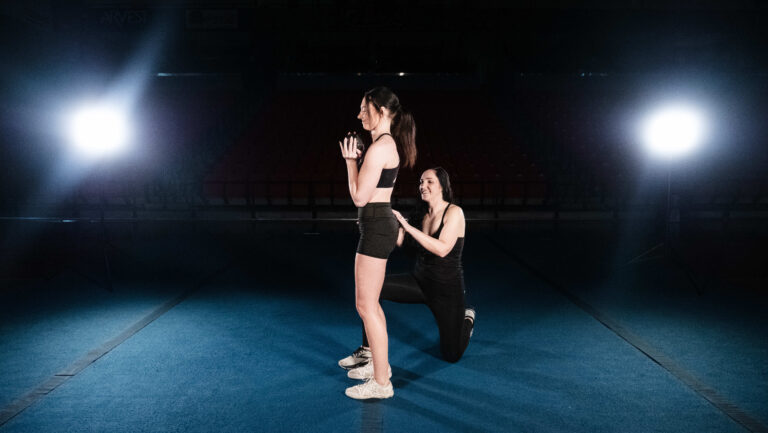
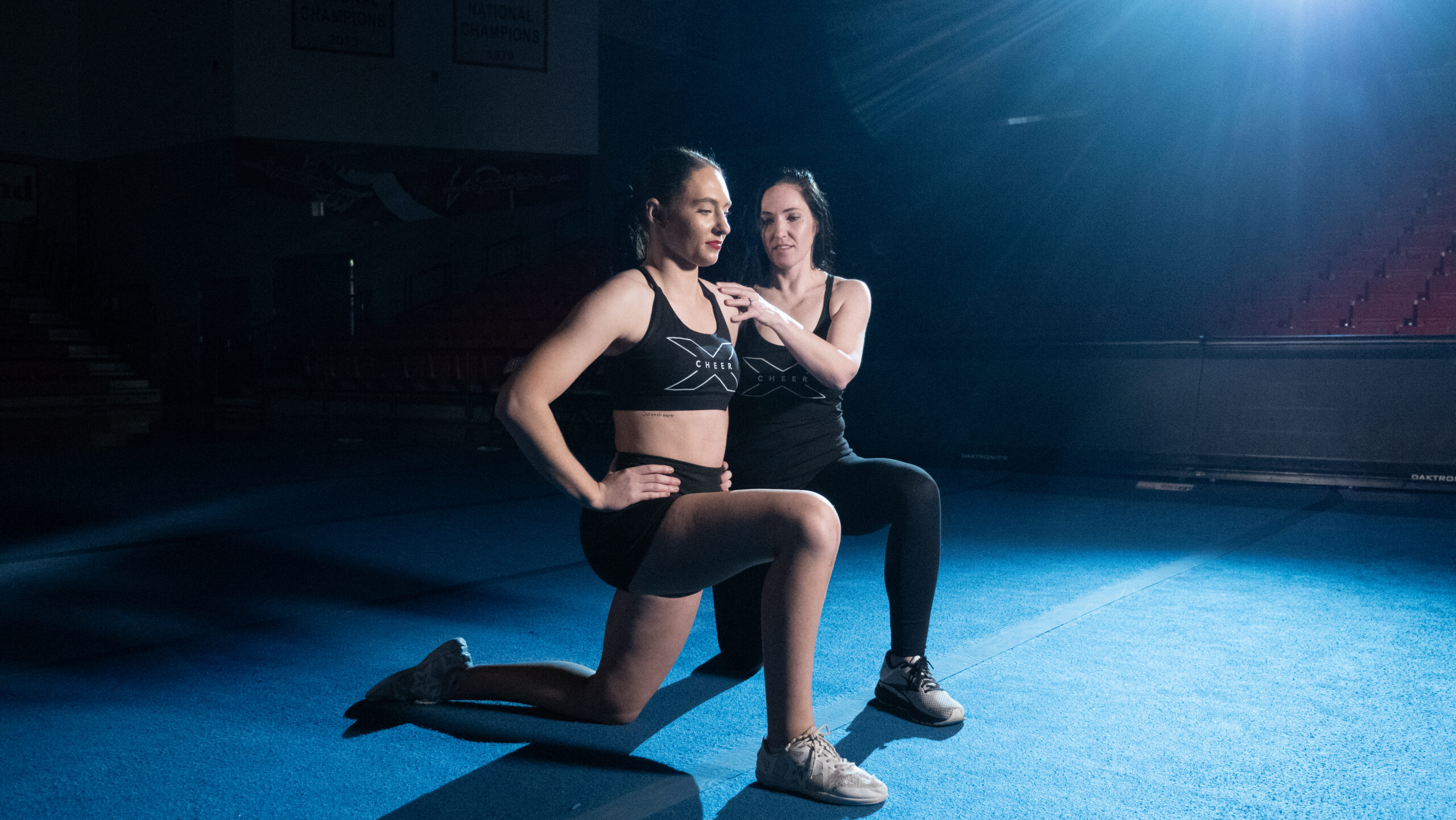
You’ve seen it (and maybe even done it): that classic “runner’s lunge” stretch with the chest lifted, ribs flared, and pelvis tipped forward. It looks like a great stretch, but here’s the catch—if the pelvis stays in anterior pelvic tilt, the iliopsoas never truly lengthens.
Instead of opening through the front of the hip, the body finds motion elsewhere—often through the low back or thigh—so it feels like a stretch, but the true hip flexor isn’t actually being stretched.
To effectively lengthen the iliopsoas, the pelvis has to start in a neutral (or slightly tucked) position. That gentle posterior tilt gives the front of the hip space to open without the low back compensating or the pelvis staying locked forward.
And this is where your spine type really matters.
If you naturally have a deeper lumbar curve (that inward low-back arch) or live in extension-based training—cheer, dance, gymnastics—your “neutral” is probably already tilted forward. Which means your “normal” hip flexor stretch might not be stretching what you think it is.
The fix isn’t about pushing harder—it’s about positioning smarter. Align your sagittal curves, balance your pelvis, and then stretch.
Now for a quick (and slightly dramatic) soapbox moment :
Even when your form is perfect, you still need enough time for the muscle to actually lengthen. Research varies, but in general, muscles need at least 30 seconds—often longer—to create meaningful change. That’s because sustained stretching temporarily shifts the length-tension relationship in the muscle.
In plain English? Your muscle becomes a little more “relaxed” and can’t produce quite as much force immediately afterward.
So please, please, please, please, please don’t do prolonged hip flexor stretches (or any long static stretch) right before power-based skills. Doing that before a back tuck, tumbling pass, or even a jump sequence can leave you short on the force you need to safely get over—and that’s how “I was just stretching” turns into “I nearly landed on my head.”
Save the longer holds for cooldowns or recovery sessions, not right before explosive movement. And honestly, you can apply that to stretching in general. (More on that in a future post—promise!)
Small alignment tweaks + proper timing + the right hold time = big payoff.
Because at the end of the day, how you stretch—and when you stretch—matters just as much as what you stretch.
The Takeaway
Tight hip flexors are rarely the root problem — they’re more like the messenger.
They often point to something bigger happening with your spine type, pelvic alignment, or movement stability.
When you train the whole system — understanding your curves, balancing the pelvis, and reinforcing stability — your hips start to move the way they were meant to.
This is how we protect the body from chronic strain, overuse, and injury — while still unlocking beautiful, effortless-looking extension skills.
Next up in our Hip Extension Series, we’ll flip to the other side of the equation: glute activation and hamstring dominance — how sleepy glutes can leave even flexible athletes fighting for control.
Until then, keep training smart, move with awareness, and remember —
flexibility means nothing without stability.
Melinda Paulsell, PT
Schroth-trained scoliosis, spine, and injury prevention specialist | Creator of Biofunctional Pattern Integration, STOP THE PROGRESSION, and the CheerX Biofunctional Performance Method
“When you know your spine, you understand your movement. And when you understand your movement—you can own your performance.”
Disclaimer: The information shared through CheerX is intended for educational and informational purposes only and should not be interpreted as medical advice. Always consult with your physician or a qualified healthcare provider before beginning any exercise or training program, especially if you have an existing condition or injury. Participation in CheerX programs and exercises is voluntary and at your own risk. CheerX and Melinda Paulsell, PT, are not responsible for any injury or health condition resulting from use of this information.