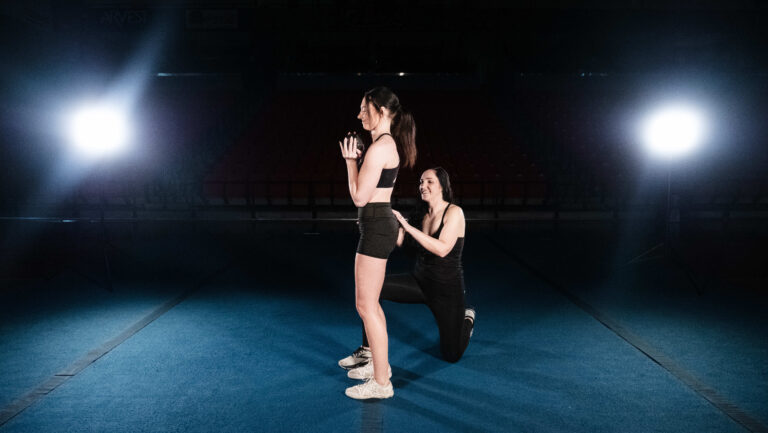
The Importance of Motor Control During Hip Extension Skills in Cheerleading, Gymnastics, and Dance
If you’ve been following the Hip Extension Series, you already know hip extension isn’t a solo act. It’s a group performance — core, pelvis, spine, glutes, hip flexors, and the nervous system, all working together.
And the system that pulls it all together?
Motor control.
Motor control is your body’s internal communication network — the timing, sequencing, stability, and awareness that allow the hips, spine, and pelvis to move as one unified team. When everything is working together, the athlete looks smooth, powerful, and effortless.
But when even one piece of the system lags — timing, strength, flexibility, alignment, awareness, or stability — everything changes.
A small kink in the chain can cause the entire pattern to break down.
Sometimes the right muscles fire, but at the wrong time. Sometimes an athlete has the flexibility, but not the control. This is why an athlete can show 20–30°+ of passive hip extension on the table… yet only access a small fraction of that range during motion. Having passive range means the potential for movement is there.
Accessing the full range requires motor control, strength/stability, flexibility, and alignment.
Motor control is the bridge between the “range you have” and the “range you can actually use.”
Why Motor Control Matters
To put is simply, passive range doesn’t predict functional range. And when the full range of hip extension can’t be achieved, the body defaults to the easiest path:
- Low back arches early
- Pelvis tilts forward excessively
- Sub optimal glute activation
- Hamstrings become dominant
- The body twists or side-bends early to “borrow” range (during asymmetrical extension skills).
And when this pattern shows up, the muscles doing too much of the work feel tight and restricted—even though they aren’t actually shortened. More often than not, it’s an activation issue, not a true flexibility problem.
What This Means for Cheer • Dance • Gymnastics
Technique isn’t just aesthetics — it’s biomechanics in motion.
Extension-based skills load the spine, pelvis, and shoulders. When motor control is missing or the system is unbalanced, the load shifts, often directly into the low back.
This is why screening matters.
Quick, simple checks for:
- Pelvic and spine position
- Hamstring extensibility
- Active vs passive hip extension
- Balance and proprioception
- Rib and spine control
- Fatigue
…can save athletes from weeks or months of irritated backs, “tight” hamstrings, or even injury.
And for flexible athletes?
The answer is usually not “more stretching.”
It’s more control, more stability, and better timing.
How Spine Type Influences Motor Control
Your natural (sagittal) spinal curves determine how your pelvis sits. If in a position other than neutral then a snow ball effect may occur.
For instance, if an athlete has an increased lumbar (low back) curve:
- Pelvis naturally rests in more anterior tilt (a little is ok, a lot…not so much)
- The glutes begin in a lengthened position, which puts them at a mechanical disadvantage for generating force
- Hip flexors start in a shortened position
- The core is also placed at a mechanical disadvantage, reducing the efficiency of the deep stabilizers responsible for supporting the spine.
Motor control doesn’t magically fix this — it adapts to it.
This is why different spine types need different strategies.
Where Motor Control Breaks Down
Motor control challenges aren’t limited to novice athletes. We see breakdowns in:
- Hypermobile athletes
- Athletes with scoliosis
- Athletes with unbalanced sagittal curves
- Athletes learning new skills
- Athletes relying on speed over control
- Athletes who are fatigued or under-recovered
- Athletes with previous injury or pain
- Elite athletes who have developed compensatory strategies to get the job done.
Proprioception becomes even more important here. It’s essentially the body’s GPS—constantly telling the nervous system where each segment is in space. Motor control takes that information and organizes movement. The sharper the proprioception, the cleaner the control. So when proprioceptive awareness is altered—as we often see in athletes with and without scoliosis or hypermobility—timing usually alters right along with it.
And this is exactly where athletes start to feel the difference. Once timing shifts, sequencing follows. And once sequencing is off, hip extension becomes harder to organize, clean, or control. That’s why proprioception and timing work isn’t “extra”—it’s foundational.
What Proprioception & Timing Training Actually Looks Like
Think less “workout” and more “retraining the communication system.”
Effective training includes:
- Learning your spine type + finding true neutral
- Slow, precise movements that expose timing errors
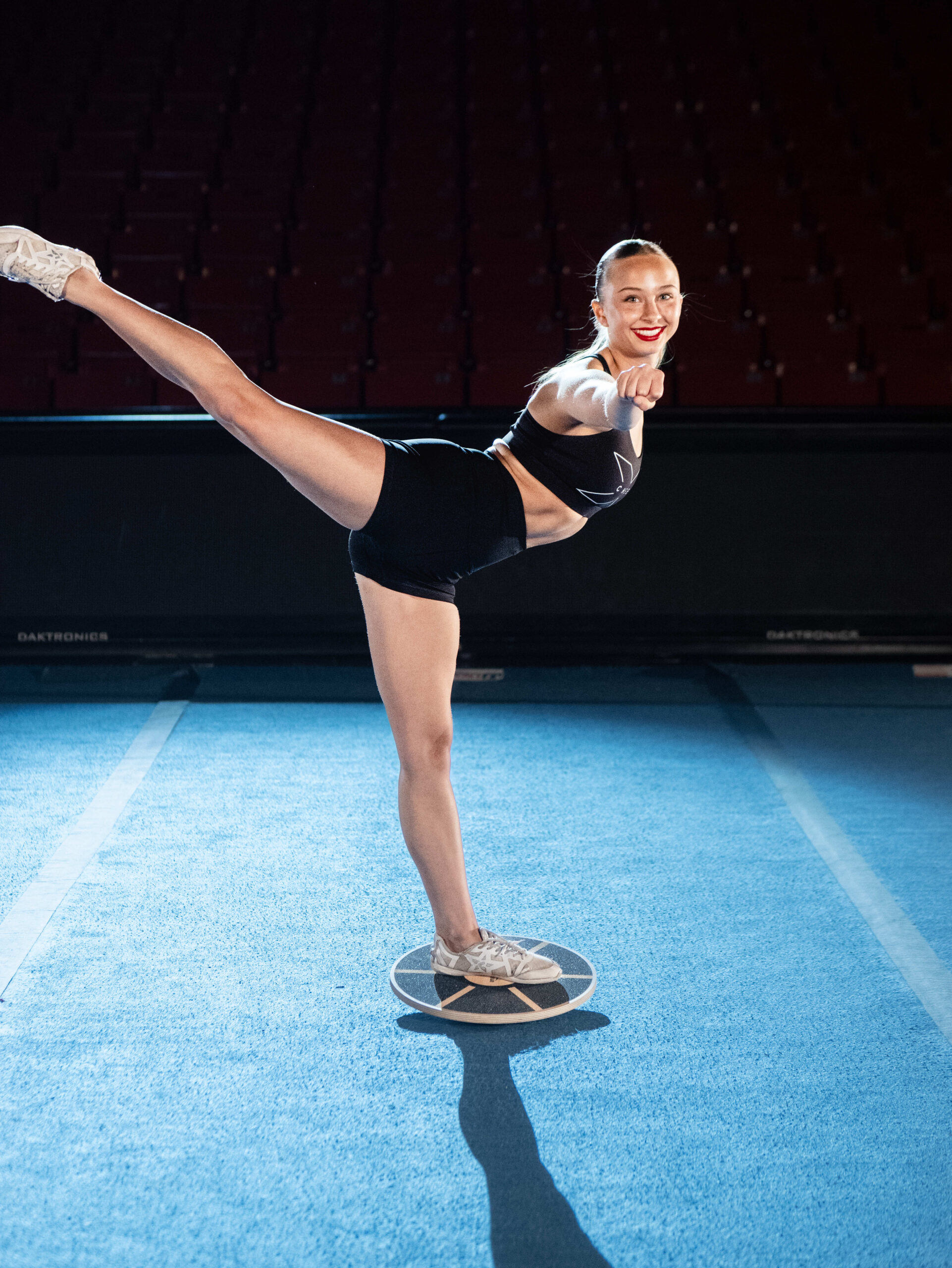
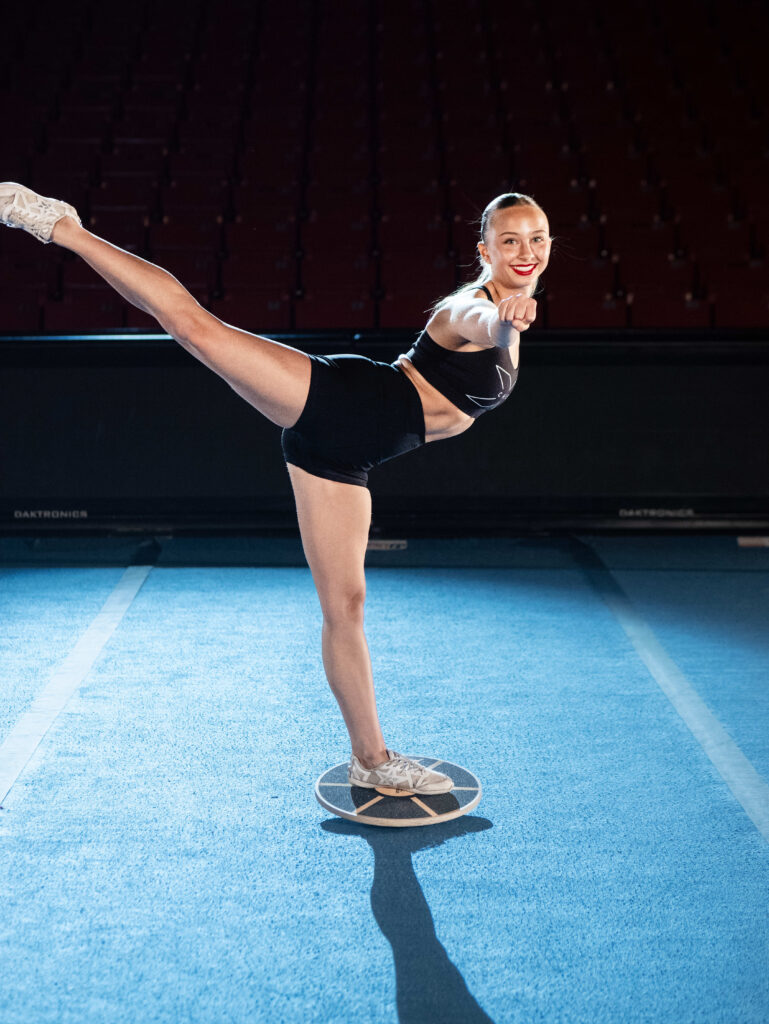
- Balance and single-leg stability work
- Oculomotor and vision training
These aren’t meant to be done fast. They’re meant to be done thoughtfully.
Accuracy improves timing. Timing improves sequencing. Sequencing improves hip extension. Hip extension improves performance.
When the System Talks Clearly… Everything Changes
When the spine, pelvis, core, hip flexors, and glutes (and beyond) finally communicate as one team, athletes experience:
- Cleaner movement
- Stronger, more controlled skills
- Less low-back compensation
- Less hamstring over-recruitment
- Lower injury risk
- Higher performance capacity
This is the secret link behind extension-based skills and long-term injury prevention in cheer, dance, and gymnastics.
The Takeaway
Motor control isn’t a small factor in hip extension — it’s one of the pillars.
It’s the difference between:
- Having range vs. using range
- Working harder vs. working smarter
- Injury vs injury prevention
Understanding your spine type, improving pelvic control, refining glute timing, and sharpening proprioception are the foundations of powerful, sustainable hip extension.
Hip extension isn’t just a movement — it’s a team effort. And when the team communicates? Everything changes.
Melinda Paulsell, PT
Schroth-trained scoliosis, spine, and injury prevention specialist |
Creator of Biofunctional Pattern Integration, STOP THE PROGRESSION, and the CheerX Biofunctional Performance Method
“When you know your spine, you understand your movement. And when you understand your movement—you can own your performance.”
Disclaimer:
The information shared through CheerX is intended for educational and informational purposes only and should not be interpreted as medical advice. Always consult with your physician or a qualified healthcare provider before beginning any exercise or training program, especially if you have an existing condition or injury. Participation in CheerX programs and exercises is voluntary and at your own risk. CheerX and Melinda Paulsell, PT, are not responsible for any injury or health condition resulting from use of this information.