Cheerleader doing proprioception balance training on a balance board
|

The Importance of Motor Control During Hip Extension Skills in Cheerleading, Gymnastics, and Dance

If you’ve been following the Hip Extension Series, you already know hip extension isn’t a solo act. It’s a group performance — core, pelvis, spine, glutes, hip flexors, and the nervous system, all working together. And the system that pulls it all together? Motor control. Motor control is your body’s internal communication network — the…

CheerX founder Melinda checking cross stabilization, gluteaus maximus activation, and hamstring dominance with hip extension

Gluteus Maximus Activation and Hip Extension: The Hidden Link Between Power, Performance, and Injury Prevention

If you’ve been following along in this Hip Extension Series, you already know that true hip extension doesn’t come from one muscle — it comes from teamwork (Part 1). The hips, pelvis, and spine all play a role. When one link falters, another steps in, often creating a ripple effect that changes the way you…

Hip Flexor Extensibility and Hip Extension: The Iliopsoas Connection in Injury Prevention for Cheer, Dance, and Gymnastics
|

Hip Flexor Extensibility and Hip Extension: The Iliopsoas Connection in Injury Prevention for Cheer, Dance, and Gymnastics

If you’ve been following along in our Hip Extension Series, you already know the secret: the body moves best when everything works together — hips, pelvis, and spine, all sharing the load. In “Bend Smarter, Not Harder”, we talked about how safe and powerful hip extension is a team effort. In “Anterior Pelvic Tilt &…

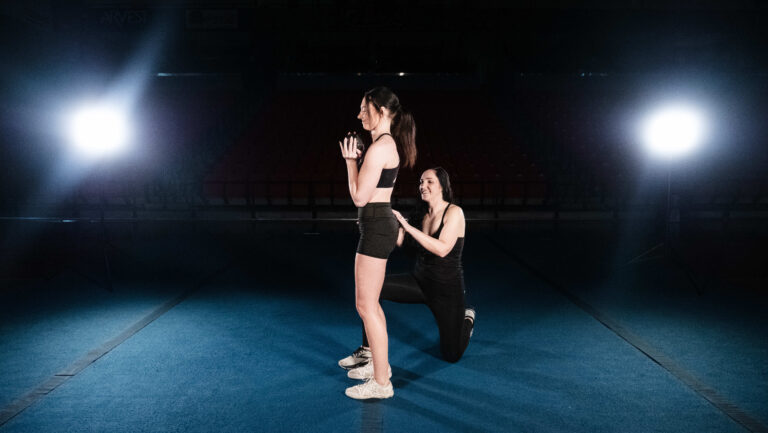
CheerX founder Melinda Paulsell showing a cheerleader how to find neutral pelvis

The Relationship Between Your Spine, Anterior Pelvic Tilt, and Hip Extension: What Every Cheerleader, Gymnast, and Dancer Should Know.

If you’ve been around here long enough, you’ve probably heard me say this once or twice (or a hundred times): your spine type is everything. What this refers to is the shape of your “natural” curves (also called sagittal plane curves) in your lower and mid back and how they relate to one another. It’s…

Cheerleader performing a back handspring.

Bend Smarter, Not Harder: Protecting Your Back in Cheer, Dance, and Gymnastics

Whether it’s a gymnast pressing into a bridge, a dancer lifting into an arabesque, or a cheer flyer pulling a scale or needle, one thing is clear: extension skills look amazing—but they’re safest and strongest when the hips, low back, and mid-back share the work. Still around CheerX long enough and you will learn about…